Water damage · Meridian, Idaho
Why Hidden Moisture Matters After Water Damage in Meridian
What professional moisture detection reveals after visible water is gone
By Cutting Edge Restoration
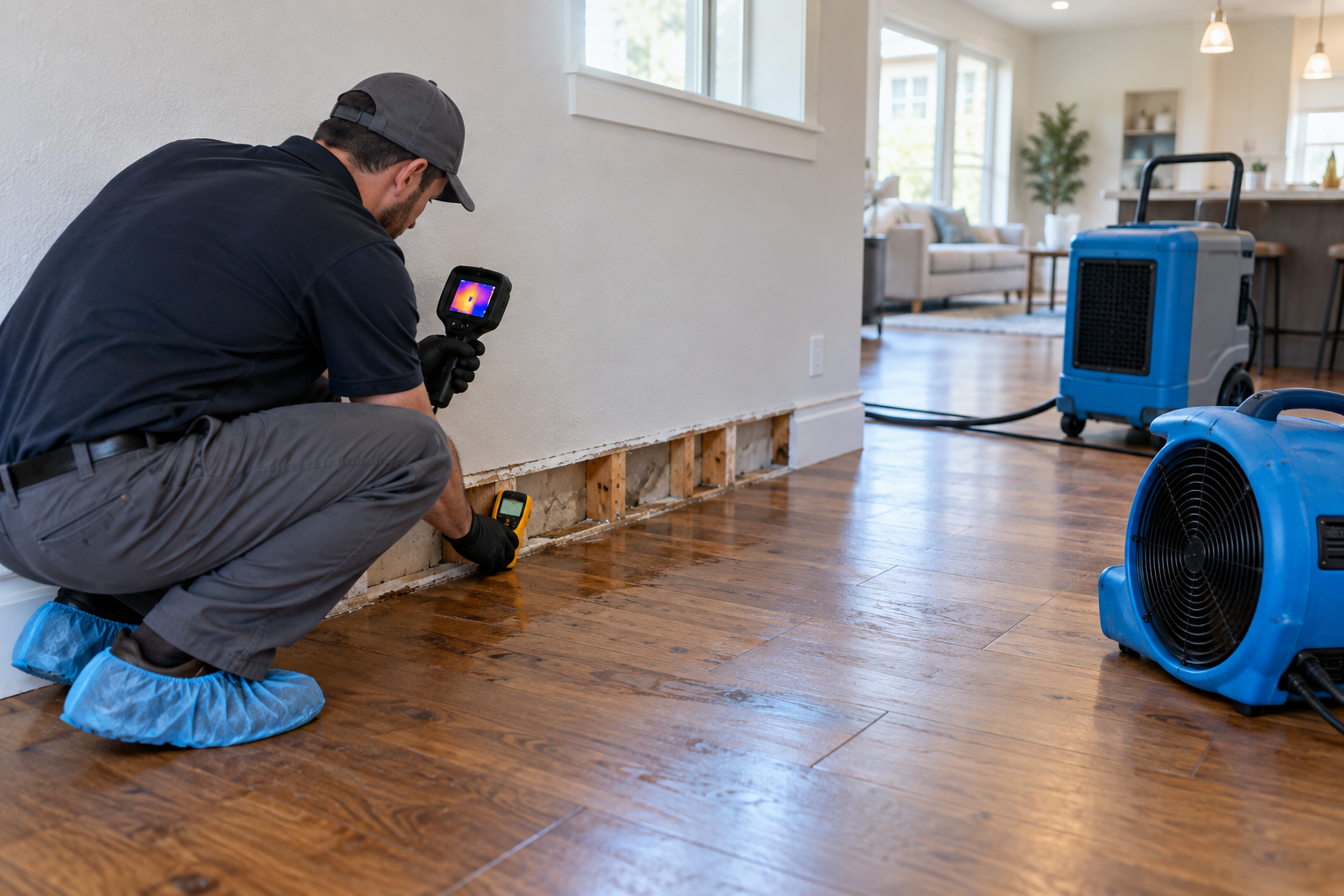
After a leak, appliance failure, or burst pipe, the floor may look dry long before the building materials are actually dry. Water can travel beneath flooring, behind baseboards, into drywall, and through concealed wall cavities. Because that moisture is easy to miss, a professional drying plan relies on measurements—not appearance alone—to decide where extraction, airflow, and dehumidification are needed.
Water moves beyond the visible wet area
Porous materials draw in water and can carry it away from the original source. The edge of a puddle does not always show the full boundary of the loss. Drywall paper, wood framing, insulation, subflooring, and carpet padding can hold moisture even when the surface feels dry. If those areas are not identified, repairs may begin while damp materials remain enclosed.
Professional instruments help map the damage
During professional water damage restoration in Meridian, technicians may use moisture meters and thermal imaging as part of the assessment. These tools help compare affected materials with dry reference areas and reveal patterns that warrant closer investigation. Thermal images do not prove moisture by themselves, so readings and physical inspection are used together to establish a practical drying scope.
Extraction and drying solve different parts of the problem
Water extraction removes standing or recoverable water. Structural drying addresses the moisture that remains inside materials afterward. Air movers encourage evaporation from wet surfaces, while dehumidifiers remove moisture from the air so drying can continue. Equipment placement and operating time should respond to the affected materials and documented readings rather than a fixed schedule.
Monitoring shows whether the plan is working
Drying equipment is only part of the process. Follow-up measurements show whether moisture levels are moving in the right direction and whether equipment should be adjusted. Progress records can also help explain the work to a homeowner or insurance representative. The goal is not simply to run fans; it is to reach an appropriate dry condition before repairs or finish materials are installed.
Hidden moisture can affect several materials
- Drywall and insulation behind walls
- Hardwood, laminate, and subflooring
- Cabinets, vanities, and toe-kick spaces
- Carpet padding and flooring transitions
- Ceiling cavities below plumbing or roof leaks
What homeowners can do while help is on the way
If it is safe, stop the water source and keep people away from areas with electrical or structural hazards. Take photos before moving damaged items, and avoid lifting wet flooring or opening walls without guidance. Water from sewage, outdoor flooding, or another potentially contaminated source requires additional precautions. Coverage varies by policy and cause, so contact your insurer and keep records of the event and emergency work.
Local water-damage help across the Treasure Valley
Based in Meridian, Cutting Edge Restoration serves Boise, Nampa, Eagle, Kuna, Star, Garden City, and other Treasure Valley communities. The team answers 24/7 and documents the drying process with photos, moisture readings, and an itemized scope that can be shared with an adjuster.